
The Guarded Stoic
Who They Are
The friend. The partner. The father. The brother. The professional.
He is capable. Composed. Respected.
But beneath the steadiness is disconnection – not just from others, but from himself.
Raised in a world where masculinity meant mastery, emotion was framed as weakness, and being needed often replaced being known, the Guarded Stoic learned to equate strength with stoicism. Love became duty. Success became containment.
This is the man in emotional exile.
- Not devoid of feeling – but estranged from it.
- Fluent in facts, not feelings.
- Not avoidant by nature – only unequipped.
The consequences?
He outruns emotion with performance, suppresses vulnerability with rigid principle, retreats into silence or “safer” connections, and minimizes discomfort – even to himself – until something breaks.
He wants intimacy, but fears it might undo him.
And so, he wears masks to survive:
-
The Overachiever
“I’m fine. I’m busy. I’m building.” -
The Moralist
“I have to stay strong.” -
The Escapist
“It’s not you. I just need something easier.” -
The Undereporter
“I didn’t think it was that serious.”
Each of these is a response to the same wound:
The fear of being loved for a self he hasn’t yet accepted.
What if there is a healthier way?
Core Emotional Landscape
- “I’ve succeeded in so many ways. Why does it still feel like something’s missing?”
- “I don’t know what I feel – I just know that I feel unseen.”
- “I used to think I was just tired. But this feels deeper.”
- “I wasn’t raised to talk about this stuff. But I’m starting to wonder whether that’s costing me.”
- “I want to be close – but I don’t know how to let anyone in without unraveling.”
Needs & Nuances
Needs
- Language that dignifies emotion without dramatizing it
- Permission to explore softness without shame
- The ability to feel without unraveling – and to slow down without losing self-respect
- Clear, grounded frameworks for inner repair – free from hype, fluff, or spectacle
- Somatic tools that support the nervous system without requiring emotional overexposure
- Rituals that build internal connection without threatening autonomy
- Male-inclusive healing environments – quiet, respectful, and non-performative
- A new model of masculinity rooted in clarity, dignity, and steady presence
- Real relationships built on reciprocity – not performance or perfection
- A felt sense of belonging that doesn’t depend on external validation
Nuances
- Fluent in thought, still learning the language of feeling
- Carries quiet shame around vulnerability, grief, or needing help
- Fears being patronized, psychoanalyzed, or seen as weak
- Wary of healing spaces that feel vague, ornamental, or emotionally manipulative
- Often alienated by self-help content that feels aestheticized or overly spiritual
- Loneliness masked by function – deeply active, deeply alone
- Under-reports distress until it manifests physically (e.g., insomnia, gut issues, hypertension)
- Craves intimacy, but lacks experience of emotionally safe reciprocity
Philosophical Grounding
Terracotta meets the Guarded Stoic not with sentiment – but with steady regard.
We don’t pry open his defenses. We don’t demand disclosure. We simply hold the door open – and wait with respect.
Here, emotional fluency is not performance. It’s a form of dignity.
Healing doesn’t begin in catharsis – it begins in coherence. Not in exposure, but in restoration.
This is not about becoming someone new. It’s about returning to the self he’s long protected – and perhaps long missed.
Terracotta becomes a space where silence isn’t broken by force, but softened by belonging. Where strength makes room for softness. Where presence is enough.
He doesn’t have to be loud to be real. He just has to stay.
All archetypes:
Generational Profiles
Emotional & Role-Based Profiles
Symbolic Pairing
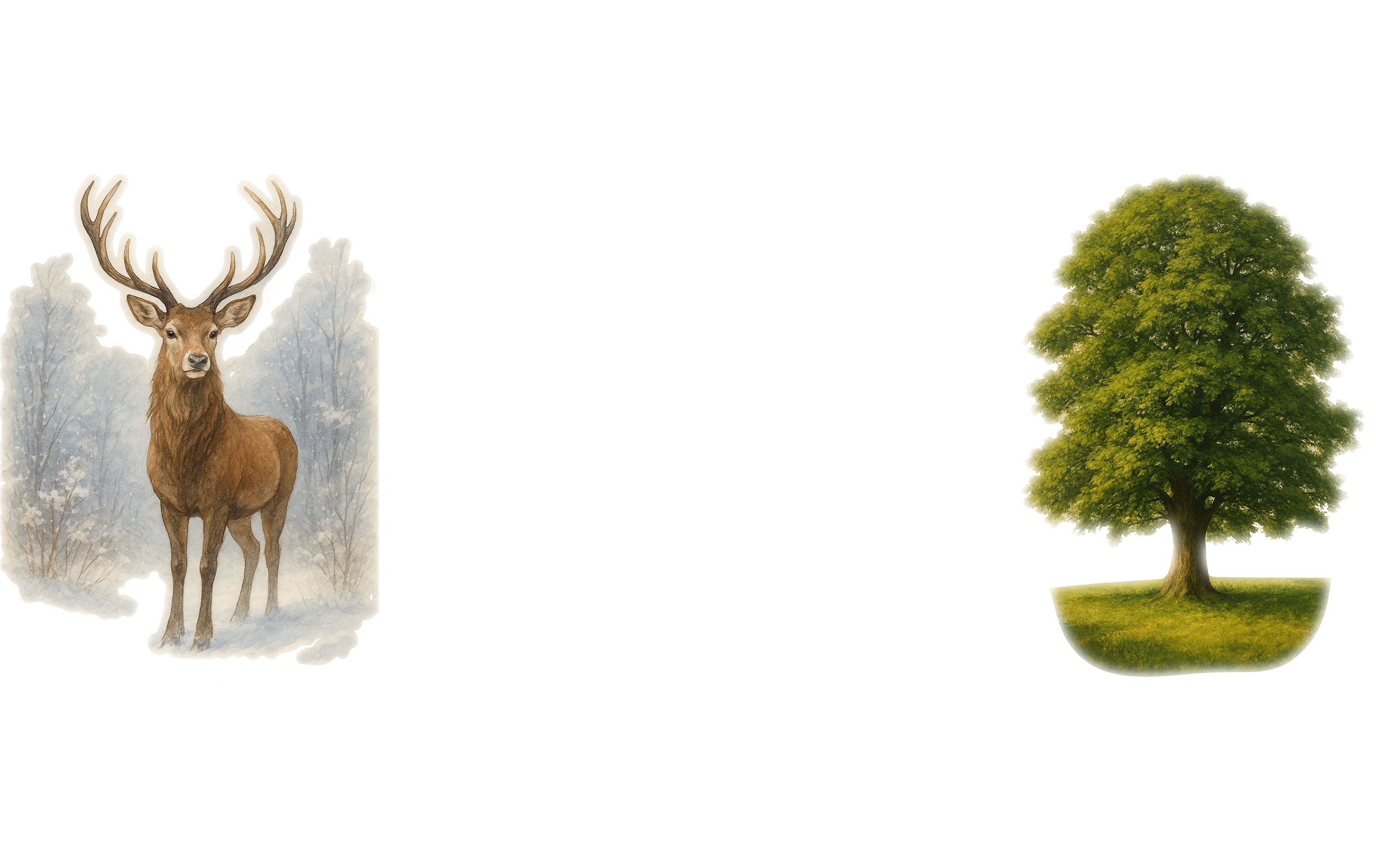
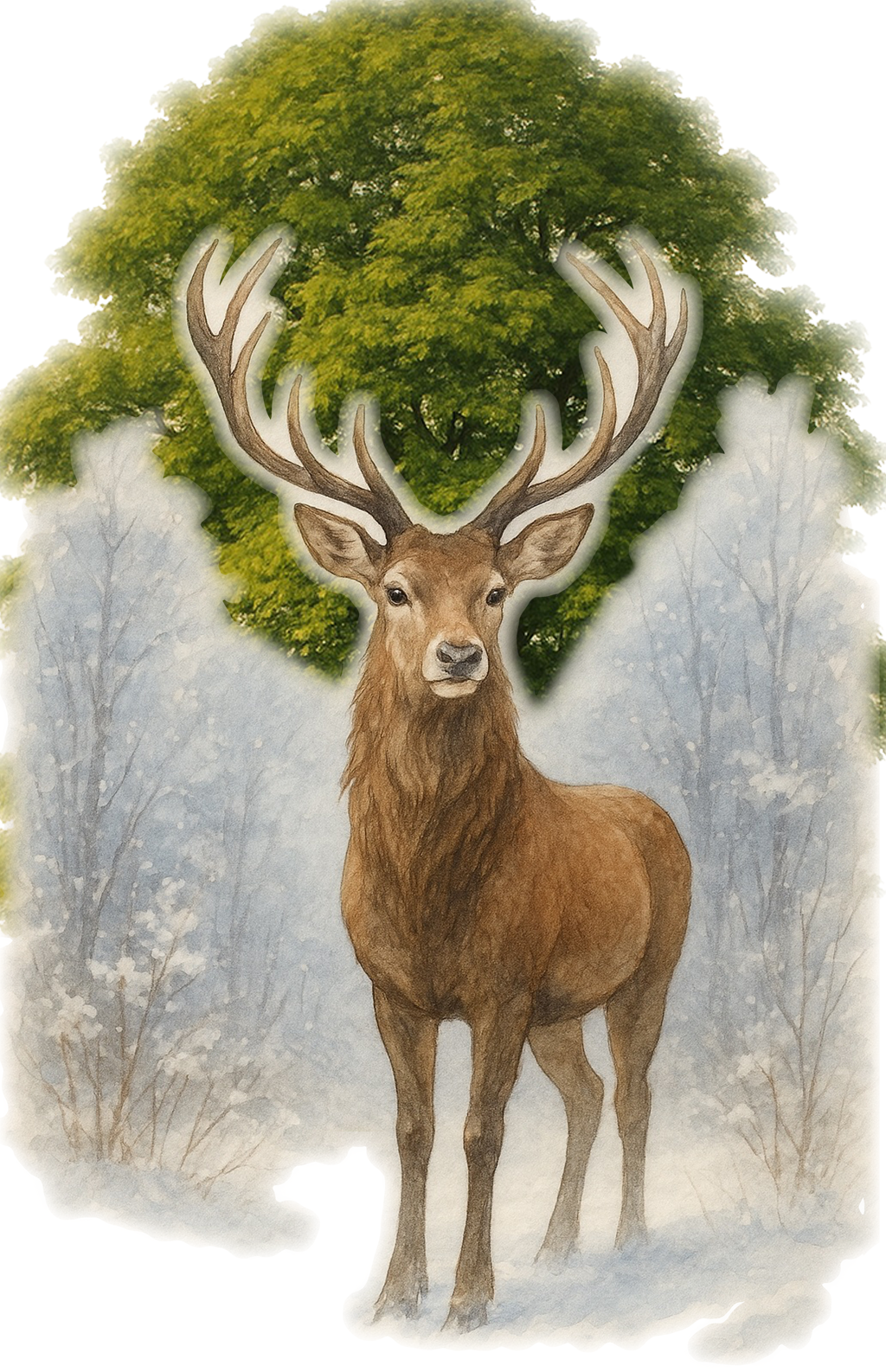
The Stag & the Chestnut Tree
The stag is a sentinel – grounded, composed, and alert. Revered not for dominance, but for presence, it moves with quiet power and watchful restraint. Often seen but rarely known, it stands as a symbol of dignity, solitude, and emotional reserve.
The chestnut tree grows slowly, offering nourishment beneath its protective shell. Its fruit must be gathered and softened by heat before it can nourish – not unlike the Guarded Stoic himself: strong, contained, and waiting to be received with patience, not pressure.
Together, they embody a strength that is steady, vital, and unperformed – not the kind that hides, but the kind that listens long enough to speak what’s true. Dignity – not in exile, but in return to deeper presence.
Invitations for This Season
- “Strength isn’t silence or perfection – it’s presence and finding the courage to stay.”
- “You were never meant to carry it all alone.”
- “Give yourself permission to feel. It’s safe to let your armor down.”
- “Like a chestnut, your tenderness was never lost – only waiting to be softened.”
- “Softness isn’t surrender. It’s access.”
- “You don’t need to be fluent in feelings – just honest with yourself.”
- “You don’t have to fix yourself. You just have to meet yourself.”
Symbolic Notes
Symbolic Pairing:
The Stag & the Chestnut Tree
The stag moves with dignity. The chestnut tree holds nourishment beneath its armor. Together, they remind us that tenderness doesn’t need to be loud – and that strength can be found in stillness, not just striving.
Invitations for this season:
- “Strength isn’t silence or perfection – it’s presence and finding the courage to stay.”
- “You were never meant to carry it all alone.”
- “Give yourself permission to feel. It’s safe to let your armor down.”
- “Like a chestnut, your tenderness was never lost – only waiting to be softened.”
- “Softness isn’t surrender. It’s access.”
- “You don’t need to be fluent in feelings – just honest with yourself.”
- “You don’t have to fix yourself. You just have to meet yourself.”